ANIMA FORMA CORPUS
JOOST DE JONGE
Anima Forma Corporis
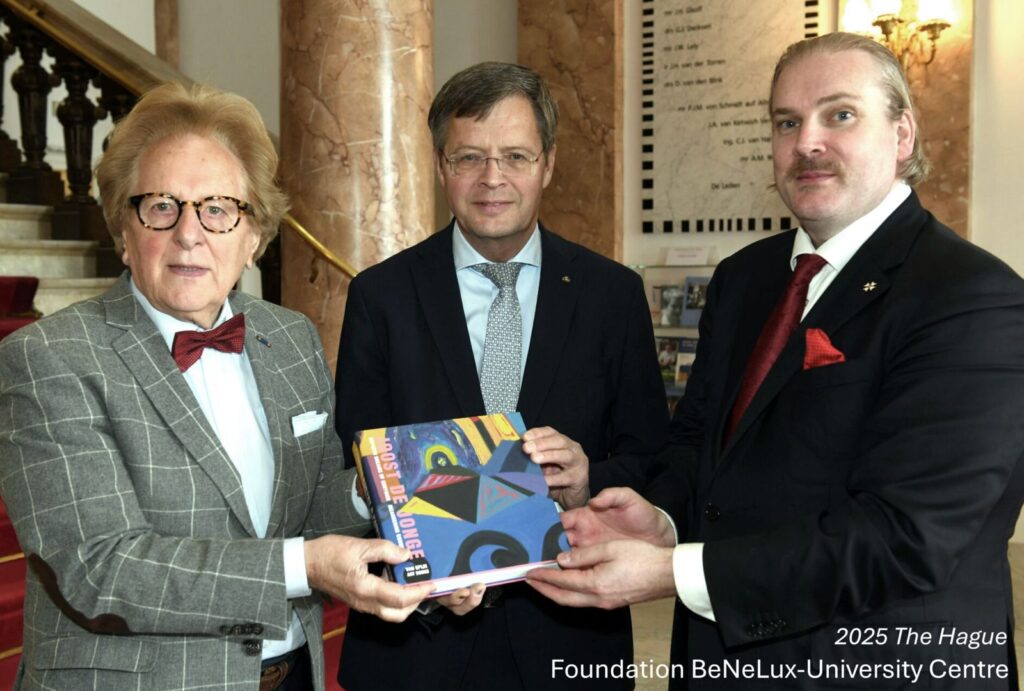
By Prof. Dr. Jan Peter Balkenende, Prime Minister of the Kingdom of the Netherlands (2002-2010)
Joost de Jonge is a special person. He is an artist whom I have come to know over the years as very ideologically moved. The hope for a better, more ideal world lies at the basis of his visual creation. He studied free painting at the University of the Arts in Utrecht and completed his studies cum laude (2002). The colours, which are so characteristic of his painting, are for him a gateway to spirituality, a search for beauty through colour.
In his catalogue “Zielespiegel” (exhibition Stedelijk Museum Amsterdam, 1997-1998), Harry Mulisch has beautifully expressed how one can best answer the question of what art is. What one has to do is go through all the answers since Plato and choose the most beautiful one. It goes without saying, according to Mulisch, that the most beautiful is also the truest. Hegel speaks in terms of: “The sensuous shining of the Idea” Schelling answers: “The finite representation of the Infinite”. Mulisch’s preference is for Schelling’s answer. Mulisch argues that both answers stem from the Platonic tradition, which says that there is another world than the one in which we find ourselves.
That world is made visible in the work of art in a general sense. The work of art as a creative epiphany of the Other. Does that Idea or “Other” objective exist; does the work of art give a glimpse of it? Or does the artwork create this “Other” for the viewer?
This philosophical body of thought, in particular German Idealism, has occupied Joost since his teens. Mulisch, a literary-philosophical world in itself, was one of his great, undisputed heroes, but the philosophy of Nietzsche and Schopenhauer also played an important role in his thinking. Think of Schopenhauer’s “The World as Will and Representation” and especially the connection with Hinduism. The church fathers such as Abbot Suger and Thomas Aquinas did not leave him untouched either. Thomas Aquinas mentions, among other things, three essential elements of the beautiful: Integritas, Consonantia and Claritas; completeness, size and clarity.
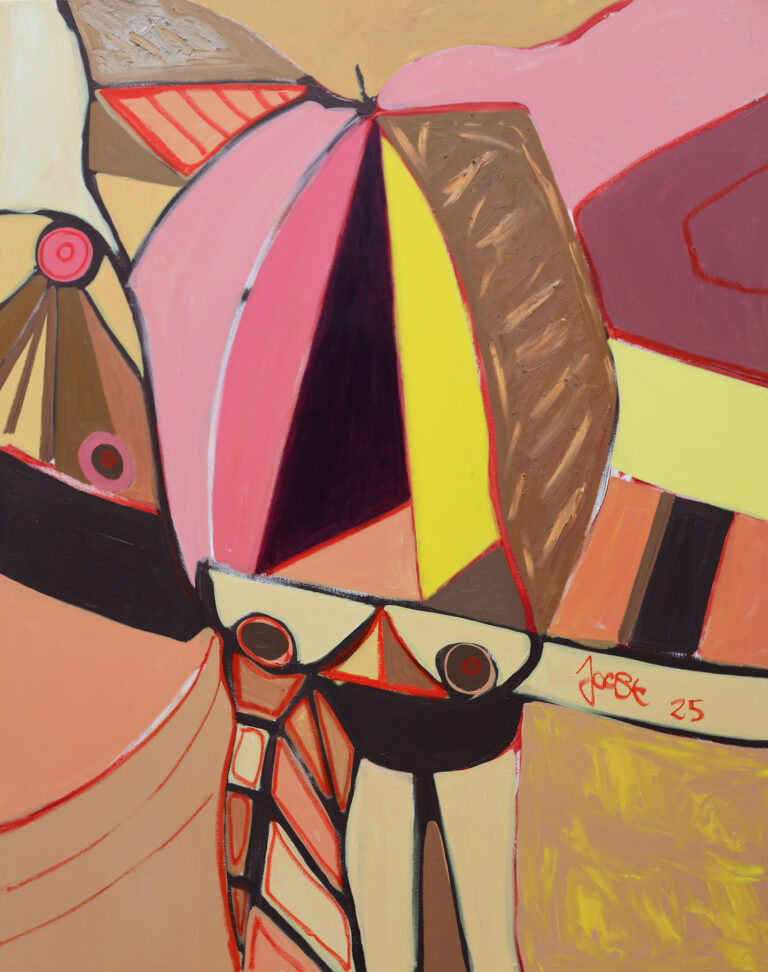
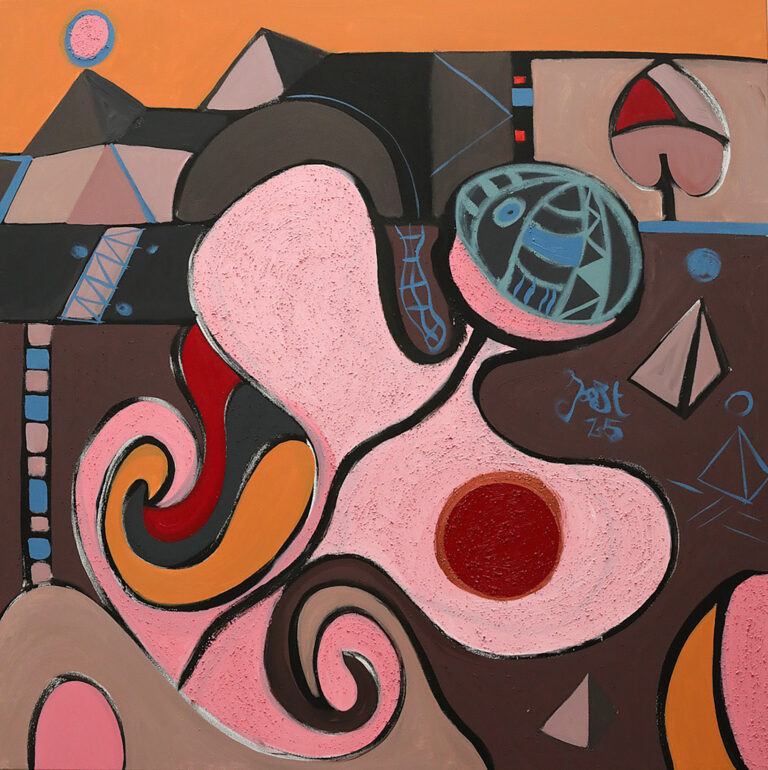
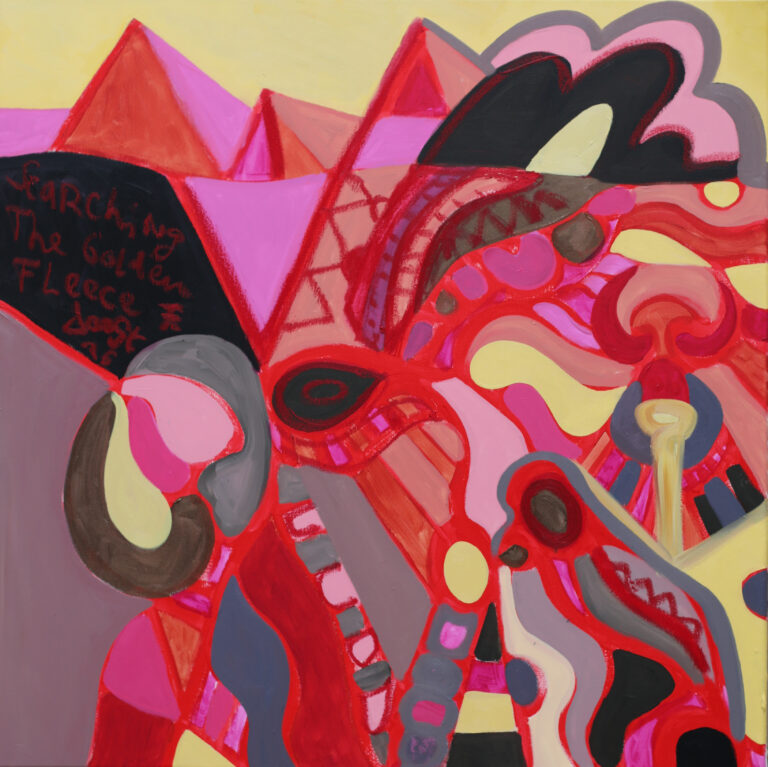
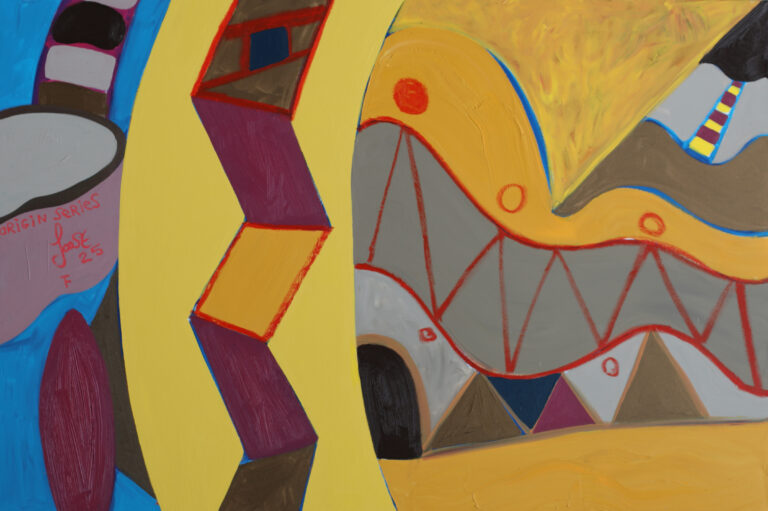
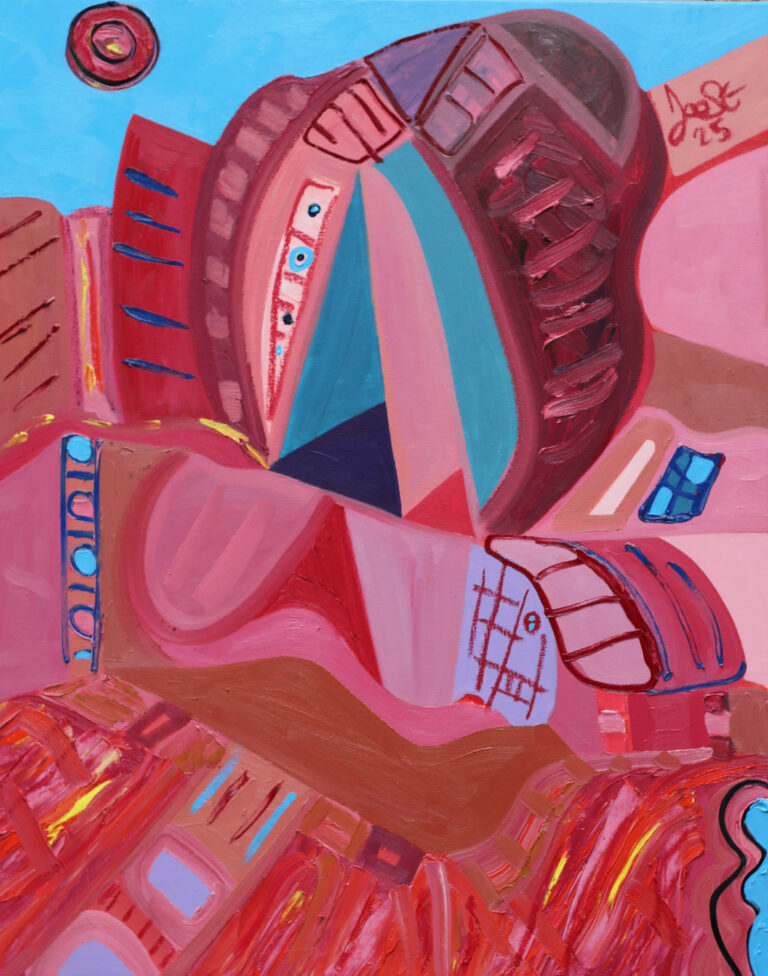
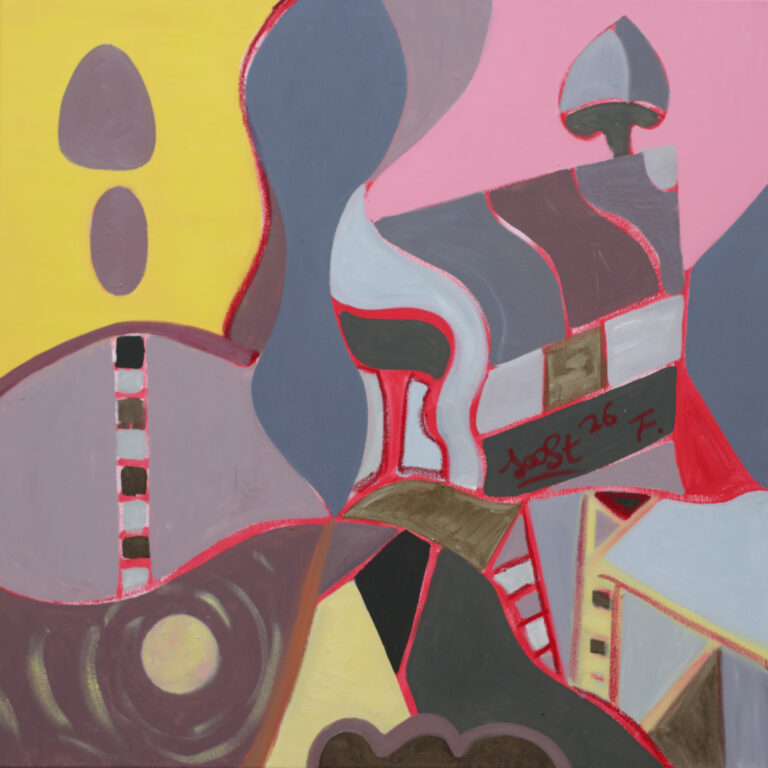
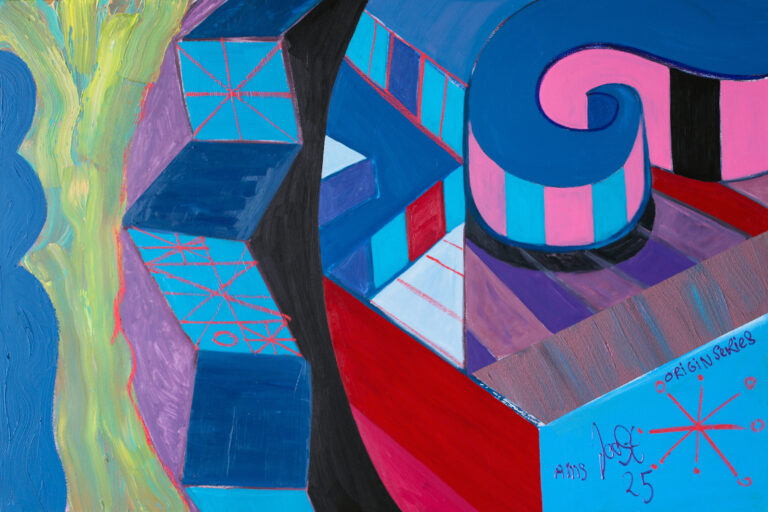
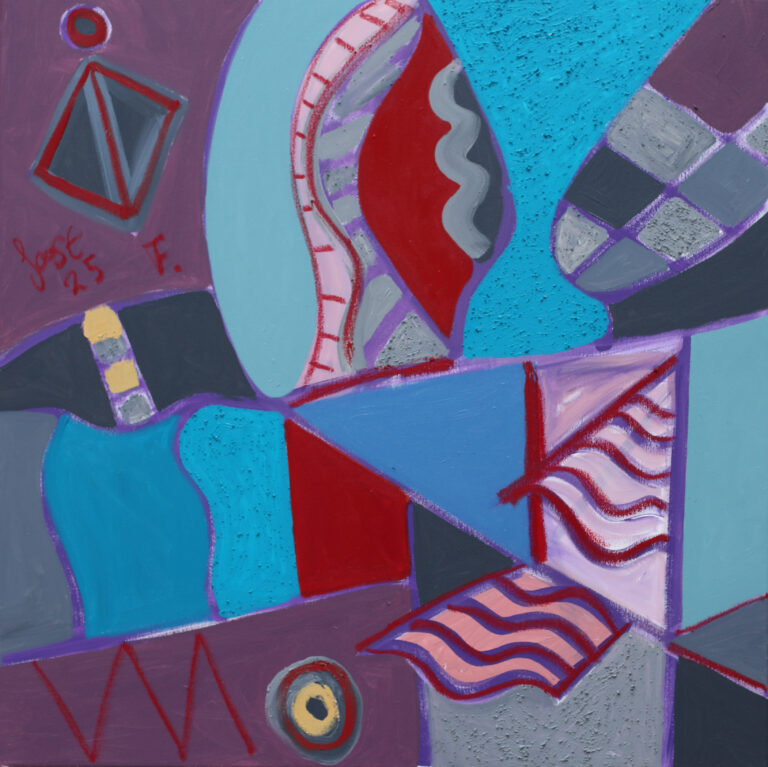
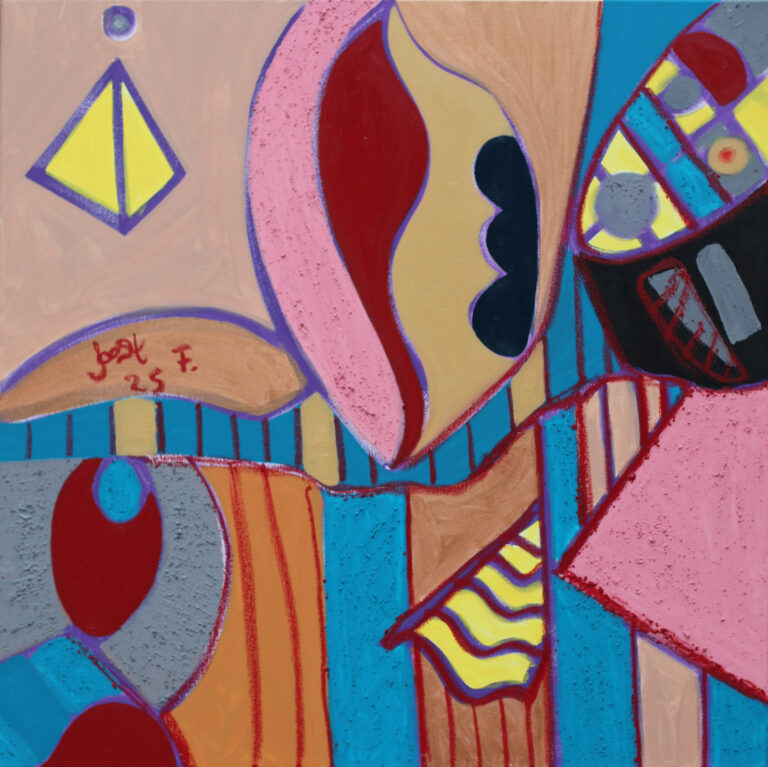
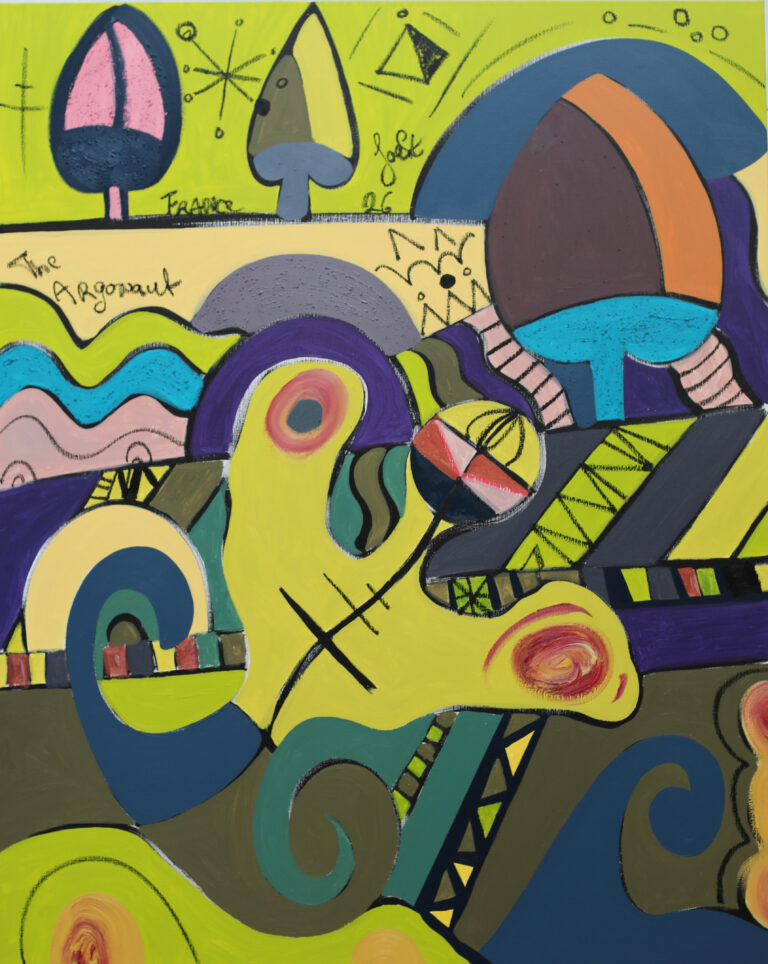
These reflections bring us to Joost’s work. Sometimes the formats of his work reflect forms of theological thought. To give an example: with the dimensions from one to three (think of a work of 210 x 70 cm) he refers to the Holy Trinity. Above all, Joost’s inspiration is literary and intuitive in nature. The work tells its own visual story through its forms. Chance plays a major role in his compositions.
Coincidence can be given a place in a natural way through the intuitive search for forms. This search for forms in an intuitive way is also a search for emptiness, creating a space for a purely visual play. In this game, the Apollonian and Dionysian go hand in hand. Although the struggle for the predominance of clear thinking (Apollonian) or passion (Dionysian) remains visible, it seems to have arrived at a harmony, but an active one, in which this struggle remains visible; it is, as it were, constantly “in flux”.
The cloud of God’s glory (shechina), between heaven and earth, is a sign of God’s presence. Joost considers artistic creation almost as something prophetic and is always looking for the presence of a divine spark. For him, the painting is an energetic field, in which space is given to the “Other”, or spirituality.
In all this, for Joost the work must be interesting to look at, with the decorative value predominating. In this way, painting in an abstract sense becomes acceptable to everyone and that art – outside the forms and colours themselves – can be experienced ‘in itself’ as a feeling. Individual expression then becomes a universal form of expression, which can connect people from many origins.